
Tatarstan, with its capital Kazan, is situated in the heart of the Rossiyan (Russian) Federation between Volga River and Ural Mountains. Kazan, is one of the largest industrial, cultural, sport city in EurAsia with unique blend of eastern and western features. In 2026 Kazan adds one more title as becoming a cultural centre of Islamic World announced by Islamic World Educational, Scientific, and Cultural Organization (ICESCO).
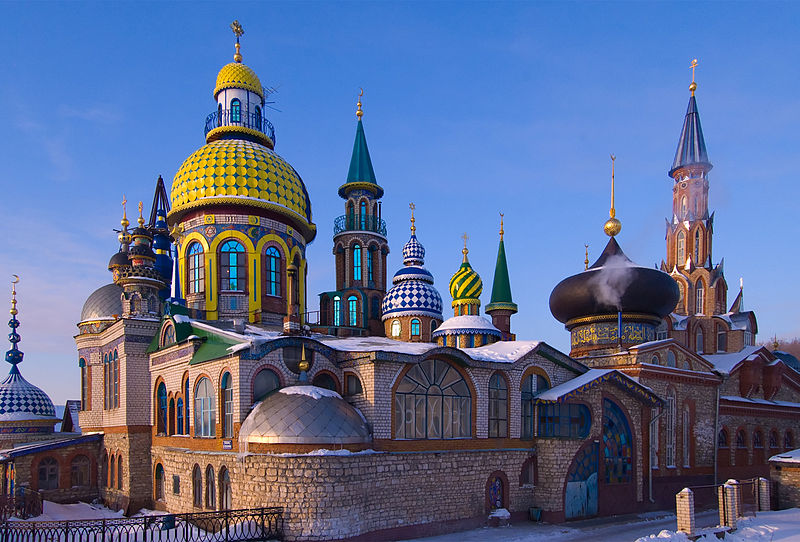
Temple of All Religions by I.Khanov
Historic heritage of the multi-ethnic city of Kazan is honored by UNESCO (United Nations Educational, Scientific and Cultural Organization). Multi-million city of Kazan serves as an example of the meaningful co-existence of Muslims, Christians and other religious confessions in one place. People with versatile cultural backgrounds consider Kazan their home. Based on 2021 census, ~ 4 million people live in Tatarstan with 53.6% of Tatars, 40.3% -Russians, 2.3%-Chavashes and 3.8 % -other ethnicities.
Tatarstan – an indigenous land of the Tatars (Volga Bulgars)– is a hub for the titular Tatar culture, language and lifestyle. The Tatars have customs and traditions that are influenced by Islam and Turkic worldview. Throughout centuries, the Volga Tatars (ancestors of nomadic Saka and settle Volga Bulgars), have been prominent contributors to education, literature, science, performing and decorative art. The cultural heritage of the Tatars is distinct, rich and robust. The Tatars are, historically, Sunni Muslims: Islam was adopted in the 10th century during the times of the Volga Bulgaria. Modern Tatars’ religious attachments vary: some fully practice Islamic rituals, some do it selectively, some continue an introduced-by-Soviet-rule ideology of agnosticism.
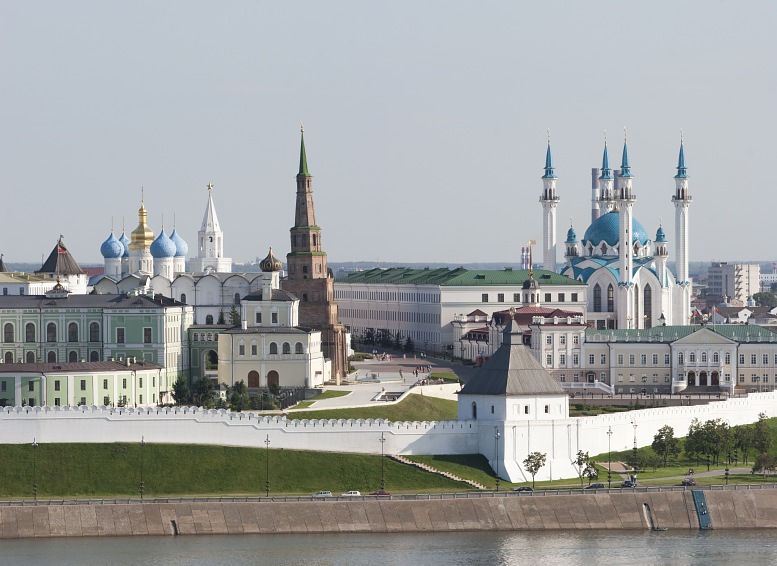
The Kazan Kremlin is a World Heritage Site
The Tatar language along with the Russian language are official languages of Tatarstan Republic. In public schools and colleges of Tatarstan, current educational practices are tailored for the Tatar language to be optional that encourages the titular language of Russian Federation to be prioritised. The Tatar language is structurally different from Russian (Slavic), it belongs to the Turkic language family. The modern written Tatar language is based on the Cyrillic script since 1938, prior it was in Latin, Arabic scripts, Uyghur writing and ancient Turkic runes.
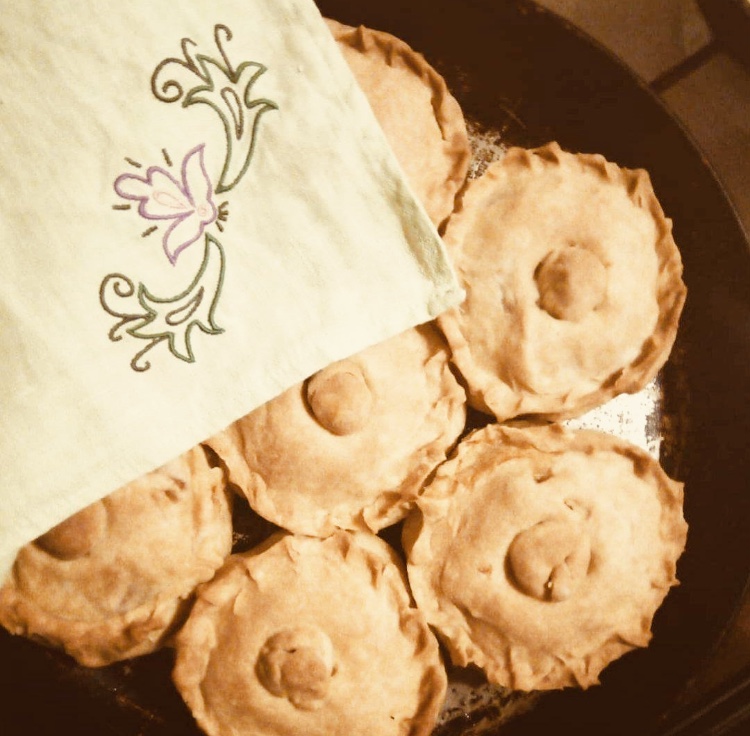
Tatar cuisine prides itself with numerous variations of staples of pastoral nomadic origins: meat, bone broth, dough, grains, root vegetables. The Tatar small pies – byalesh, ushchposhchmak, peremeshch– are famous for their tastiness and “homey” flavour. The Tatar dessert shchyaq-shchyaq (fried dough pieces “glued” with honey) is a must on any get-together. Shchyaq-shchyaq is always accompanied with a cup of the Tatar shchai – a delicate brew of wild marjoram flowers with black tea leaves that can be enjoyed with milk or steeped with lemon and zhimeshler (dried fruits).
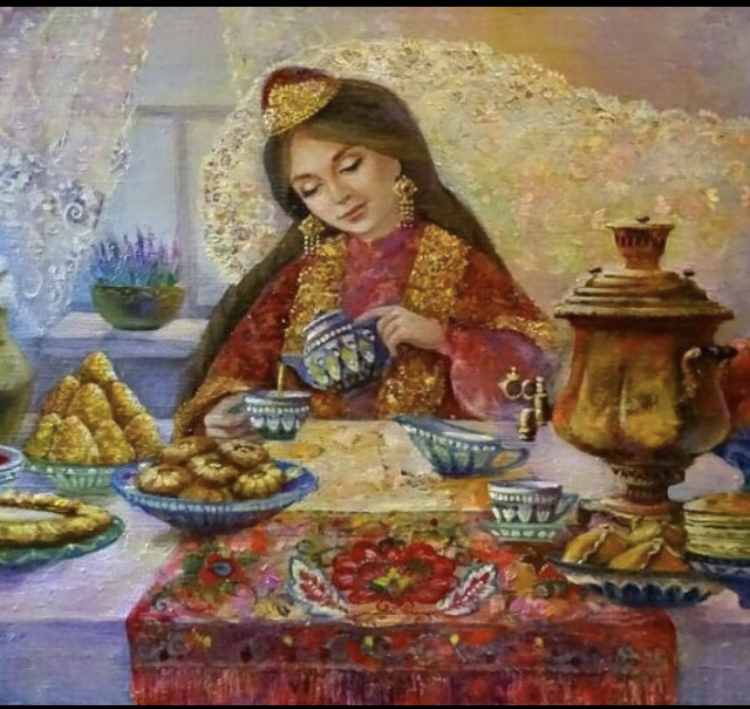
Artwork by A.Buzuneeva
 Unique Leather Mosaic of the Tatars
Pingback: Kazan is TripAdvisor’s Destinations on the Rise | Unique Leather Mosaic