When one googles “boot(s)”, tons of images of different boots come up: fancy, classy, ugly, modern, in all shapes and colors. But the exceptional boots that are created using the unique Kaiyly Kun technology (aka Tatar Leather Mosaic) do not… Among the other factors, it can also be due to the fact that the boots made with the technique this website is dedicated to, belong to a different category that embodies a unique collaboration of footwear and art.
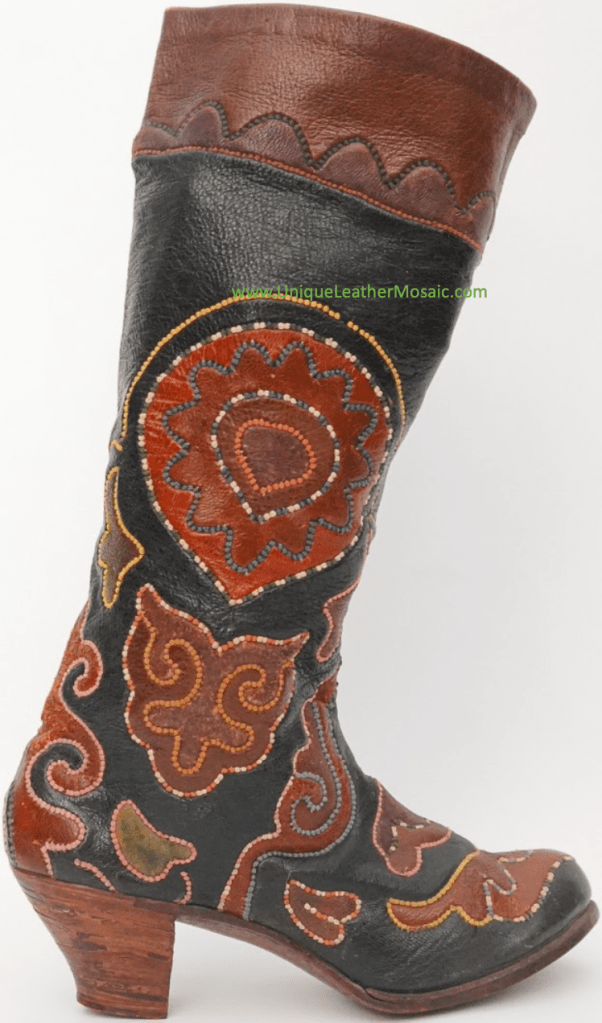
This exceptional footwear category is shchiteq.
A word shchiteq (“shch” is pronounced as alveolo-palatal [ɕ] , close to “ch” in “Chicago“ or “c” in “appreciate” or as Portuguese “ch” in “chiado”) comes from the Tatar language word читек (pronunced as “щитэк”; russified versions of “ичиг”, “ичитыг” are also in use).
The Tatar word shchiteq comes either from 1) abbreviated form for чигелгән итек (shchigelgen eeteq) meaning “decorated / embroidered boot” or 2) configuration of эчке итек (eshchke eeteq) meaning “stocking-like leg covering / boot”. Shchiteq is always made from soft leather that is almost always intricately ornamented with Tatar-inspired coloured leather cutout designs that are stitched together by hands from the inside.
The technique is unique and sophisticated that no other ethnic people but the Volga Tatars have mastered it over the centuries.
Shchiteqler (“ler” is for plural form in Tatar language) are popular in Tatarstan, Russia, as well as highly revered in Turkic and Islamic countries. Shchiteqler, we also call them Tatar boots, are being produced in small quantities in Kazan-surrounding areas of Tatarstan, Rossiyan Federation. The vintage shchiteqler can be found in many museums worldwide and on the marketplaces.
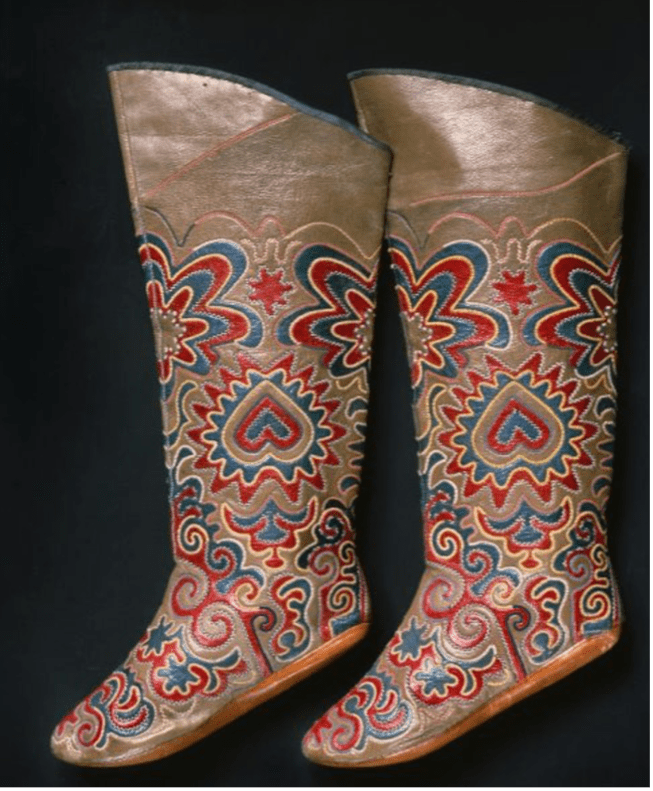

The word читек is googalabe. But shchiteq is not yet… It is desired that association of a boot with shchiteq picks up. It is desired that acknowledgement and due credits are offered to the Volga Tatar people who had mastered the unique “made-only-by- hands” Art of Kaiyly Kun (Tatar Leather Mosaic) and has been working hard for centuries to keep it alive.
 Unique Leather Mosaic of the Tatars
