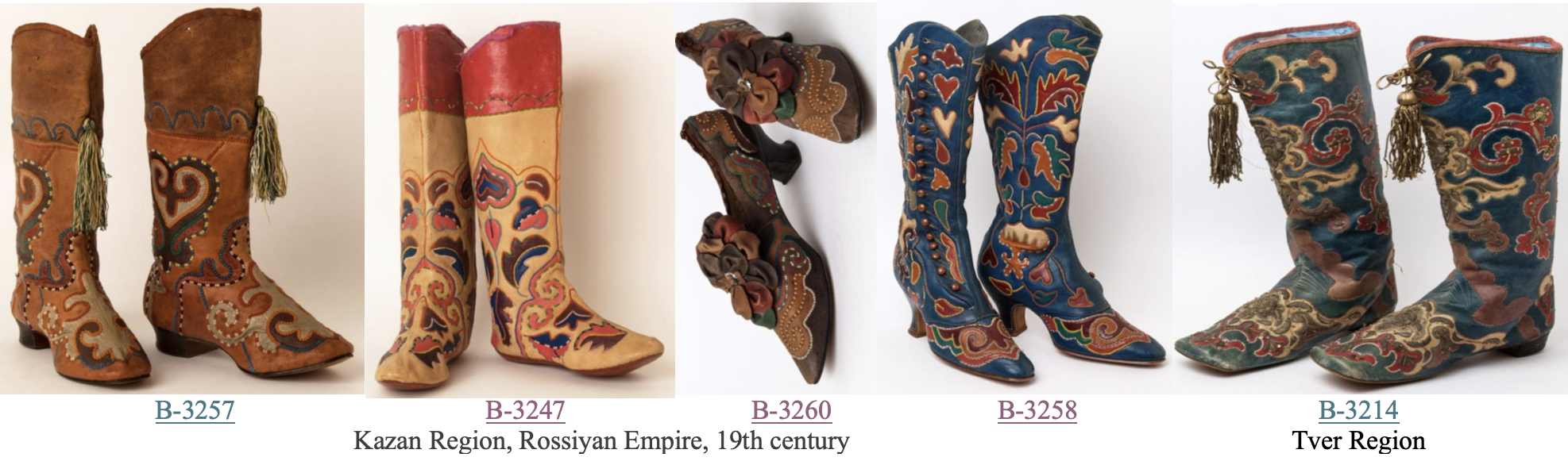
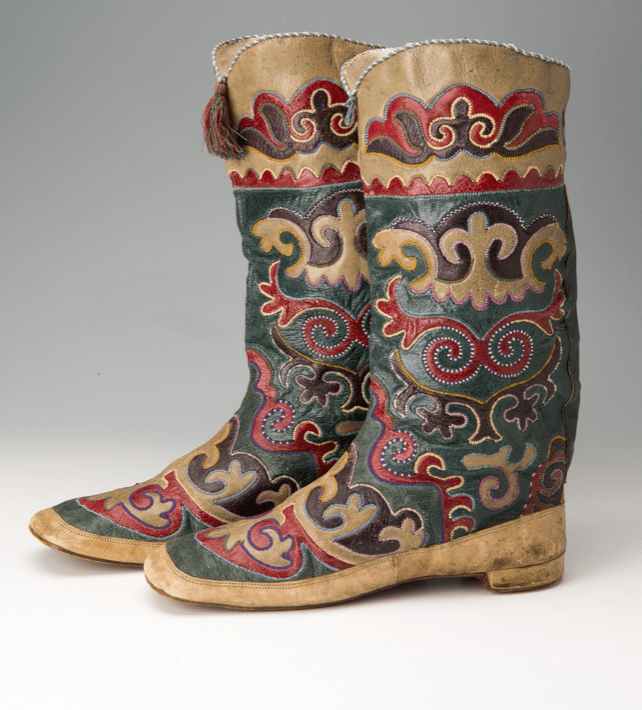
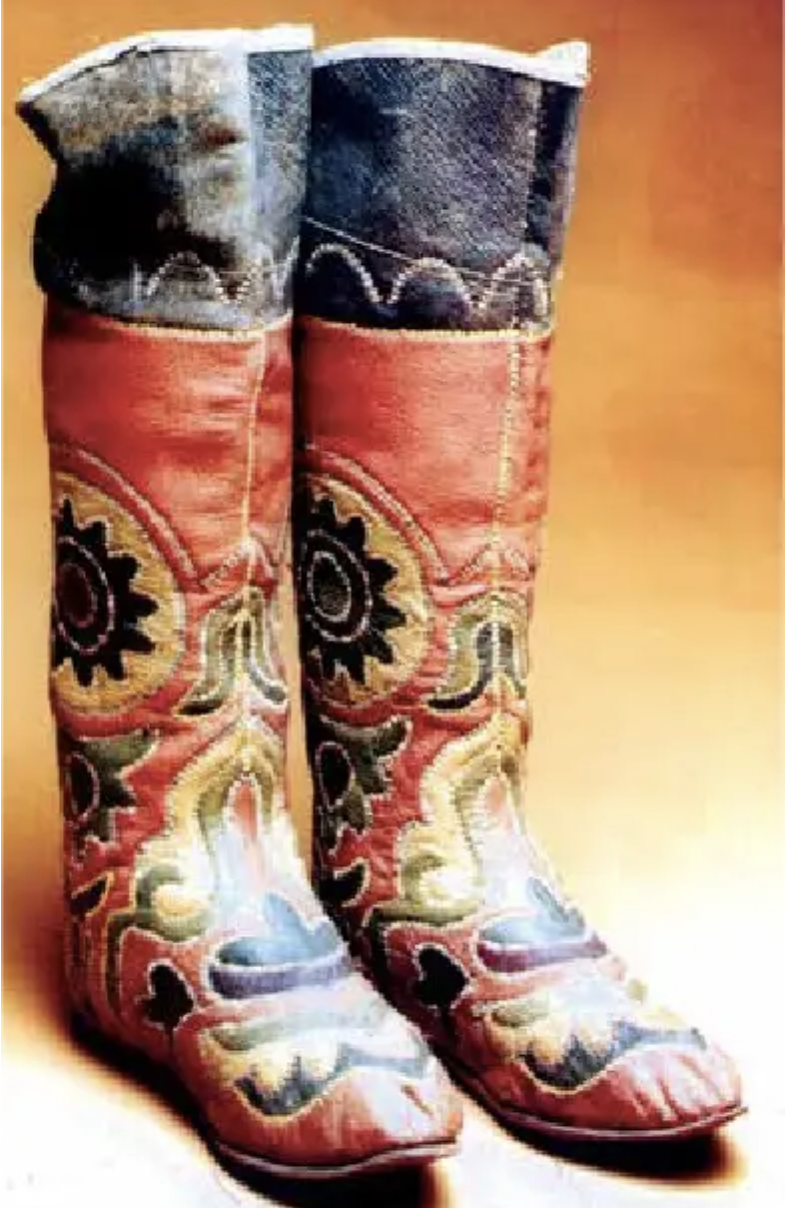
Tatar boots– originally shchiteqler – can be found in the collections of many prominent museums. There, the boots are labeled as originated from Kazakhstan, Uzbekistan, Kyrgyzstan, Tajikistan, East & West Turkestan, Crimea, Russia, Indonesia, Ukraine, Georgia, Hungary, Asia, Mongolia, China, Europe.
Although the museums tend to label these boots in accordance with the area they come from to their collections, those labels do not always accurately credit the authorship of the unique craftsmanship and technology of the exquisite leatherwork: The boots are crafted using ancient unique Kaiyly Kün (English alternative: Tatar Leather Mosaic) technology which has been developed, mastered and promoted by the Volga (Idel-Ural) Tatars on their indigenous lands of the Volga Bulgaria (now Tatarstan Republic of Rossiyan Federation). The craftsmanship of shchiteqler is exquisite and was specifically in great demand in 18th-early 20th centuries. The trade of the Tatar boots was popular and profitable: Shchiteqler were produced by large manufacturers and small individual entrepreneurs in Kazan-Arshcha and exported to many countries (the museums’ labels tell!) as well as crafted by individual Tatar masters and apprentices in vast Muslim-populated areas of Russian Empire, Central Asia, Siberia, Eastern Europe, Caucasus.
Currently, authentic hand-made shchiteqler with intricate hand-stitched patterns are produced only in small batches in/around Kazan (Tatarstan, Rossiyan Federation) by a small number of private companies in the same manner (but in much smaller scale) as the hand-tooled and inlaid/outlaid cowboy boots are produced in USA and Mexico. The hope is that shchiteqler regain popularity within broader audience that value and celebrate craftsmanship, cultural roots and functional beauty!
Disclaimer: Photos on this page are either taken by the researchers of this platform or collected, via rigorous process, on digital domains accessible to public. Sources are credited, respected and acknowledged. When possible, the images are linked to the digital collections of the museums: resolutions are the subjects to change by the hosting entities.
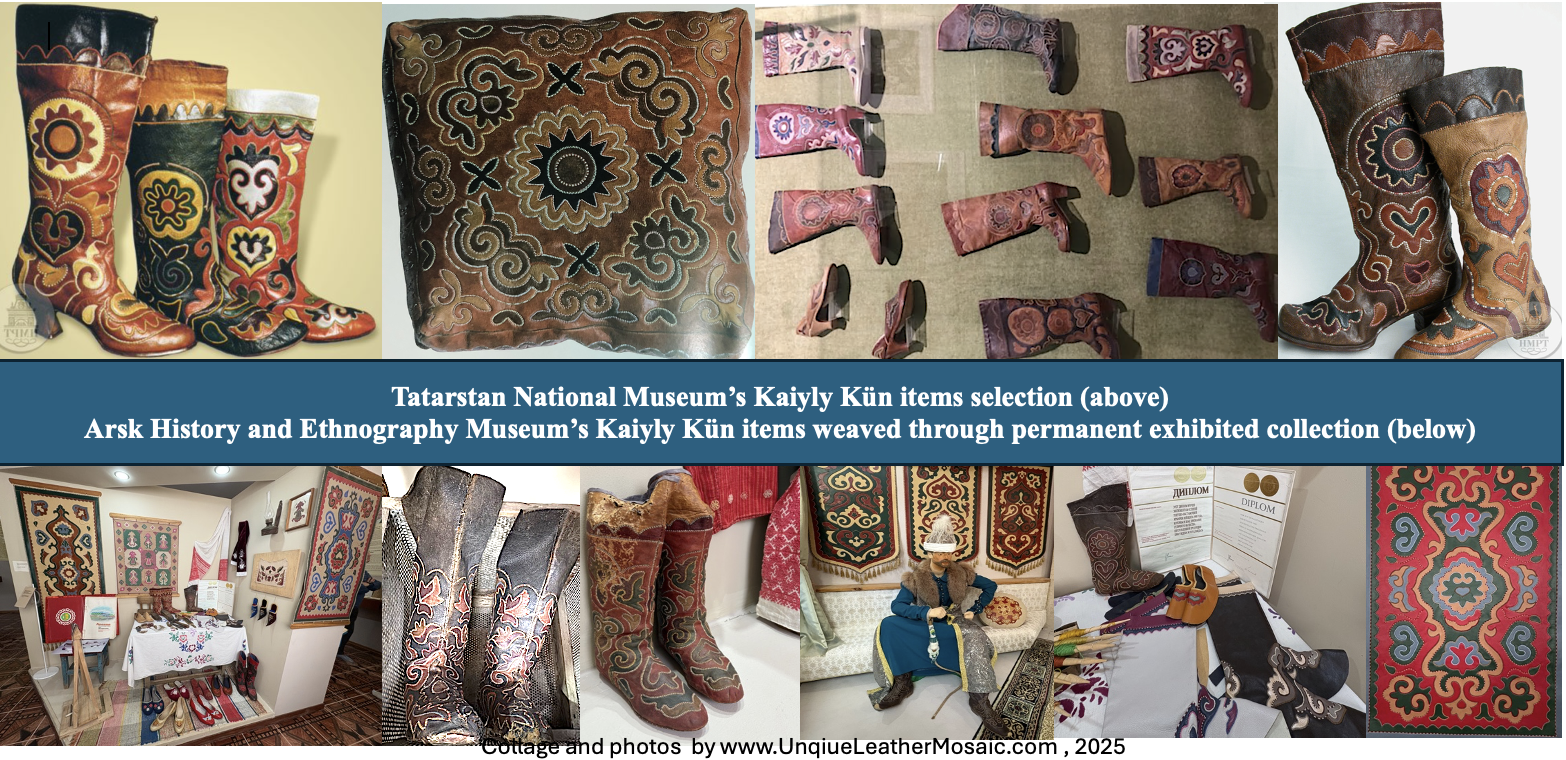
Tatarstan State National Museum in Kazan and History and Ethnography Museum in Arsk have the largest collection of shchiteqler and other items crafted with Kaiyly Kün technology
“Shoes or No Shoes” Museum in Belgium has the largest shchiteqler collection outside of Tatarstan

V&A (Victoria and Albert) Museum, London, Great Britain
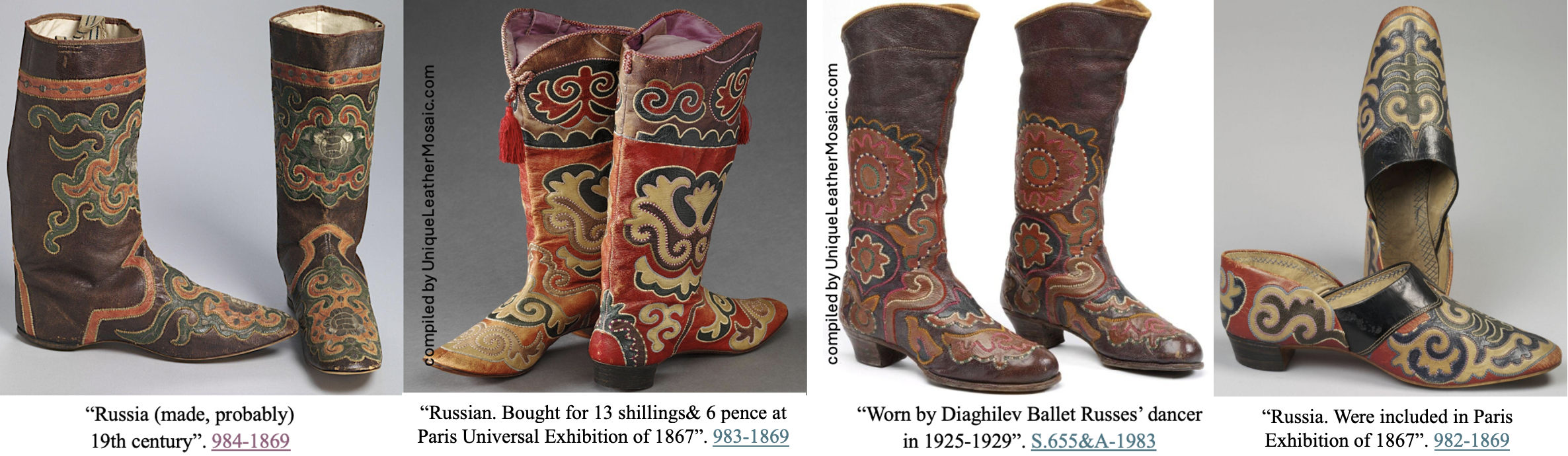
Online collection of Museum of Ethnography in Budapest, Hungary

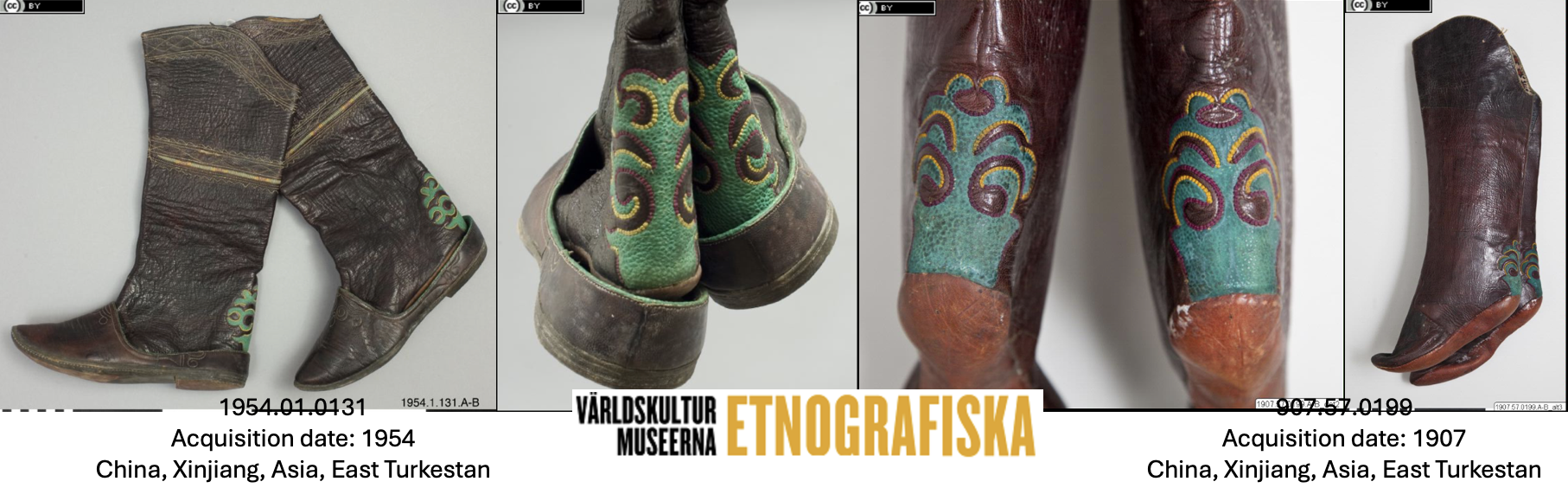
Världskulturmuseerna – The National Museums of World Culture of Sweden

Deutsches Ledermusuem in Offenbach, Germany, owns 12 Kaiyly Kün items, one of which is dated 1812 (the oldest known with exact date). The only image that is permissible to be shared is the boot on the left that was photographed for the Deutsches Ledermuseum’s catalogue #6 published in 1980. (The copyright is: © Deutsches Ledermuseum, C. Perl-Appl. The caption reads: Boot, Kazan, Tatarstan, early 19th century). Crafted with Kaiyly Kün technology items are in the Deutsches Ledermusuem’s archives: They are neither displayed on the museum floors nor on the digital domain.
Boston Museum of Fine Arts Massachusetts, USA. Shchiteq on the left (# 97.166) is noted as made by Tartar (Tatar) people in 19th century with place of origin as possibly the Crimea, Ukraine. Gift of T.M Seabury. Shchiteqler on the right (43.1707) are noted as pair of woman’s riding boots, Russian, Kazan province, Tartar (Tatar) people, 19th century. Object place as Java, Indonesia. The Elizabeth Day McCormick Collection

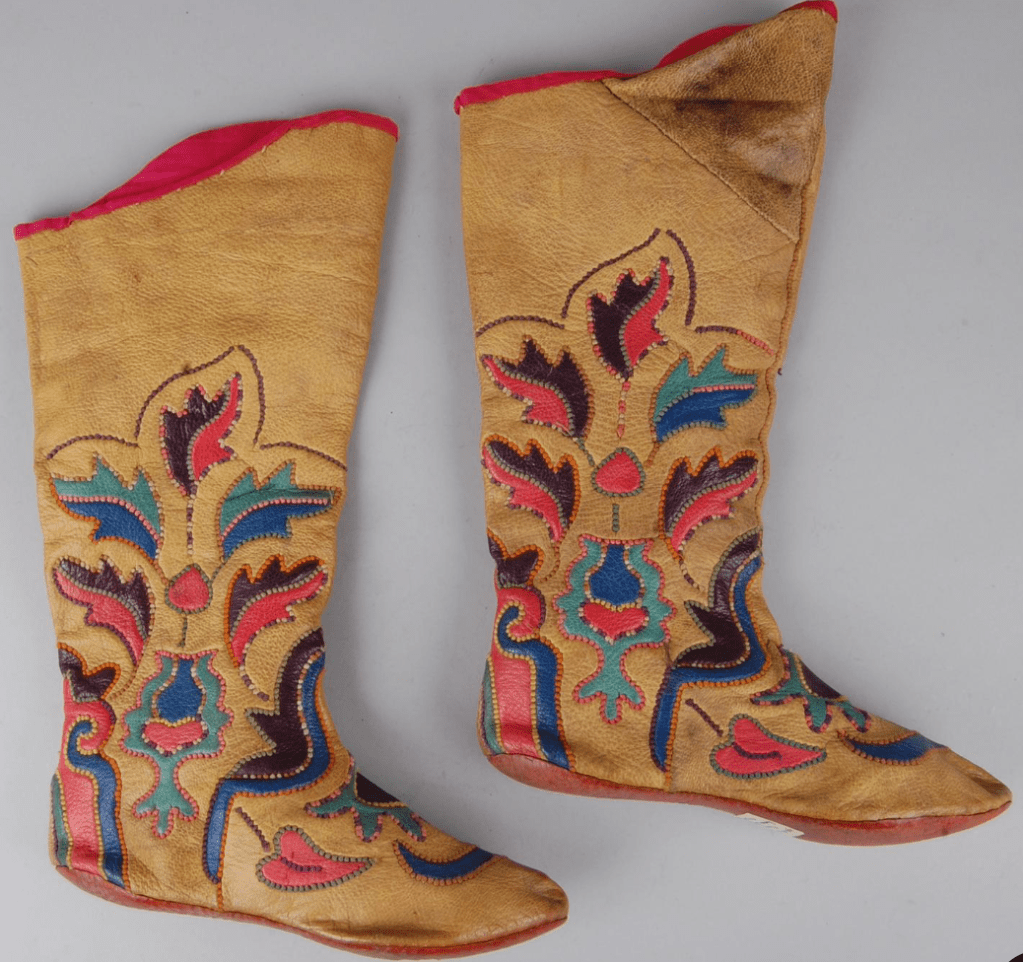
The British Museum, London, Great Britain. These two Tatar shchiteqler are described as woman boots (1956,07.11 &1956,07.10) and are attributed to be made by Kazakh people and noted as acquired from Balkash Lake area of Kazakhstan. Gift of Frank and Olivia Vans Agnew.

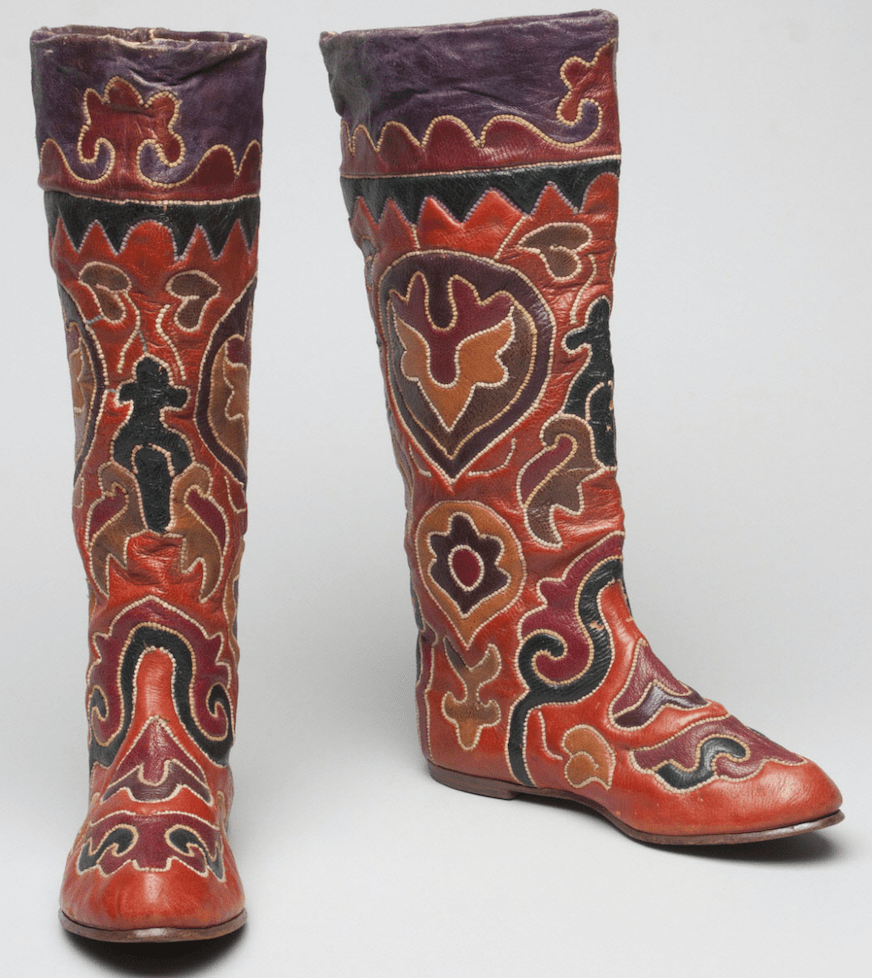
Philadelphia Museum of Art Pennsylvania, USA. This Tatar shciteqler are described as Man boots (1941-79-304) and are noted to be made in Uzbekistan in early 20ies century. Gift of Christian Brinton. Ornament (Tatat traditional hear jewalry shchulpy) (1918-129) noted as to be made in Kasan, Uzbekistan, circa 1818. Gift of Mrs. Hampton L. Carson


Kuntzkamera
Saint Petersburg, Russia
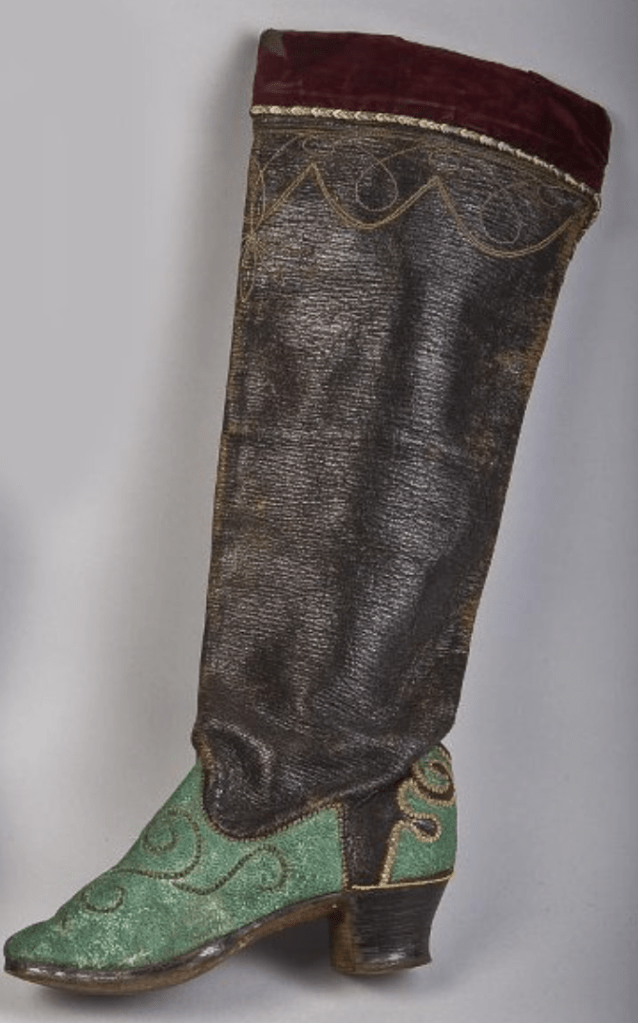
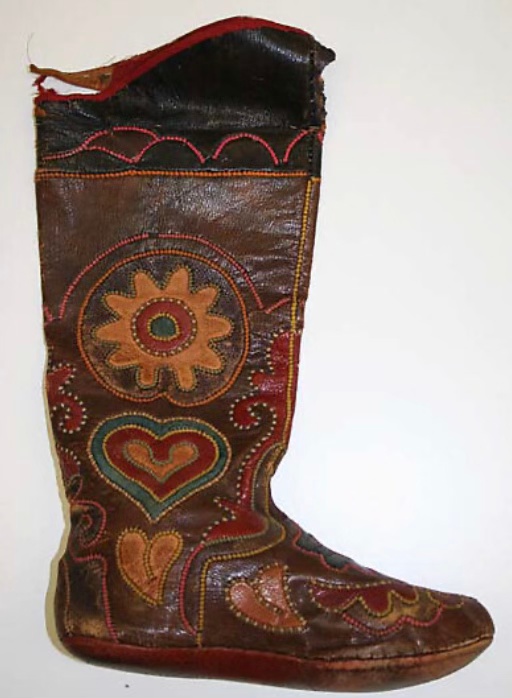
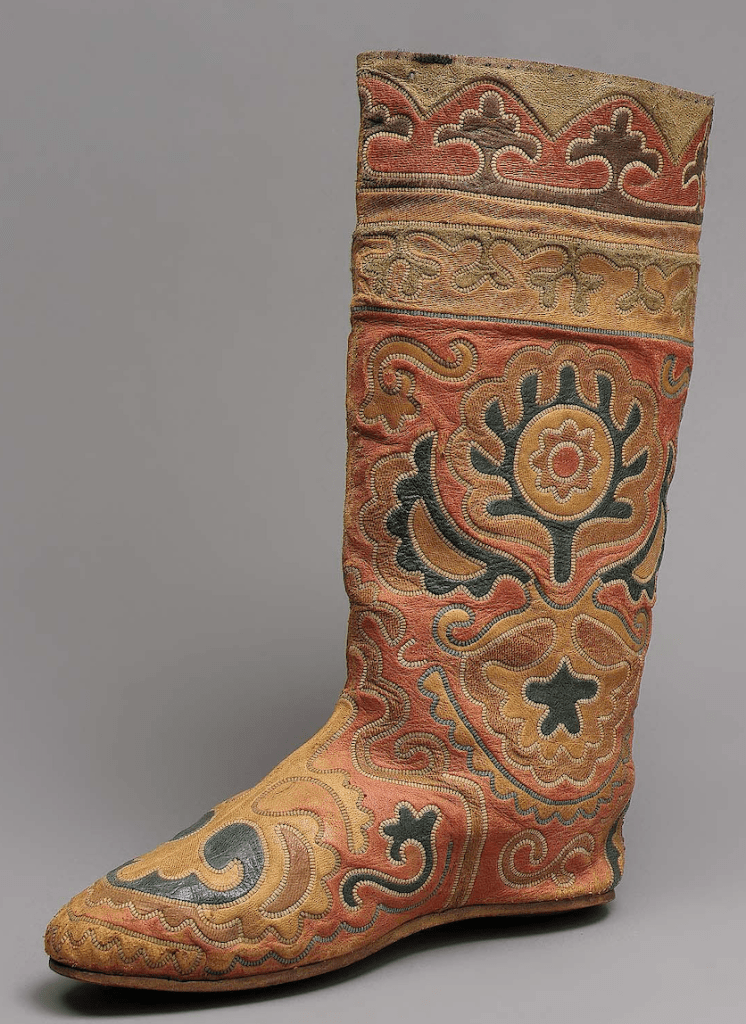
Metropolitan Museum of Art, New York, USA
Shchiteq on the left (C.I.39.91.4f) is attributed as Russian and is a part of Russian wear ensemble. Gift of Irene and Alice Lewisohn Crowley, 1939. Shchiteq on the right (C.I.48.29.4a, b) is attributed to present-day Uzbekistan, Bukhara. Made in late 19th century. Got of Eugene Jackson Koop, 1948.



Gift of the B.Blackmans
Museum of International Folk Art, Santa Fe, USA
Saint Petersburg, Rossiyan Federation


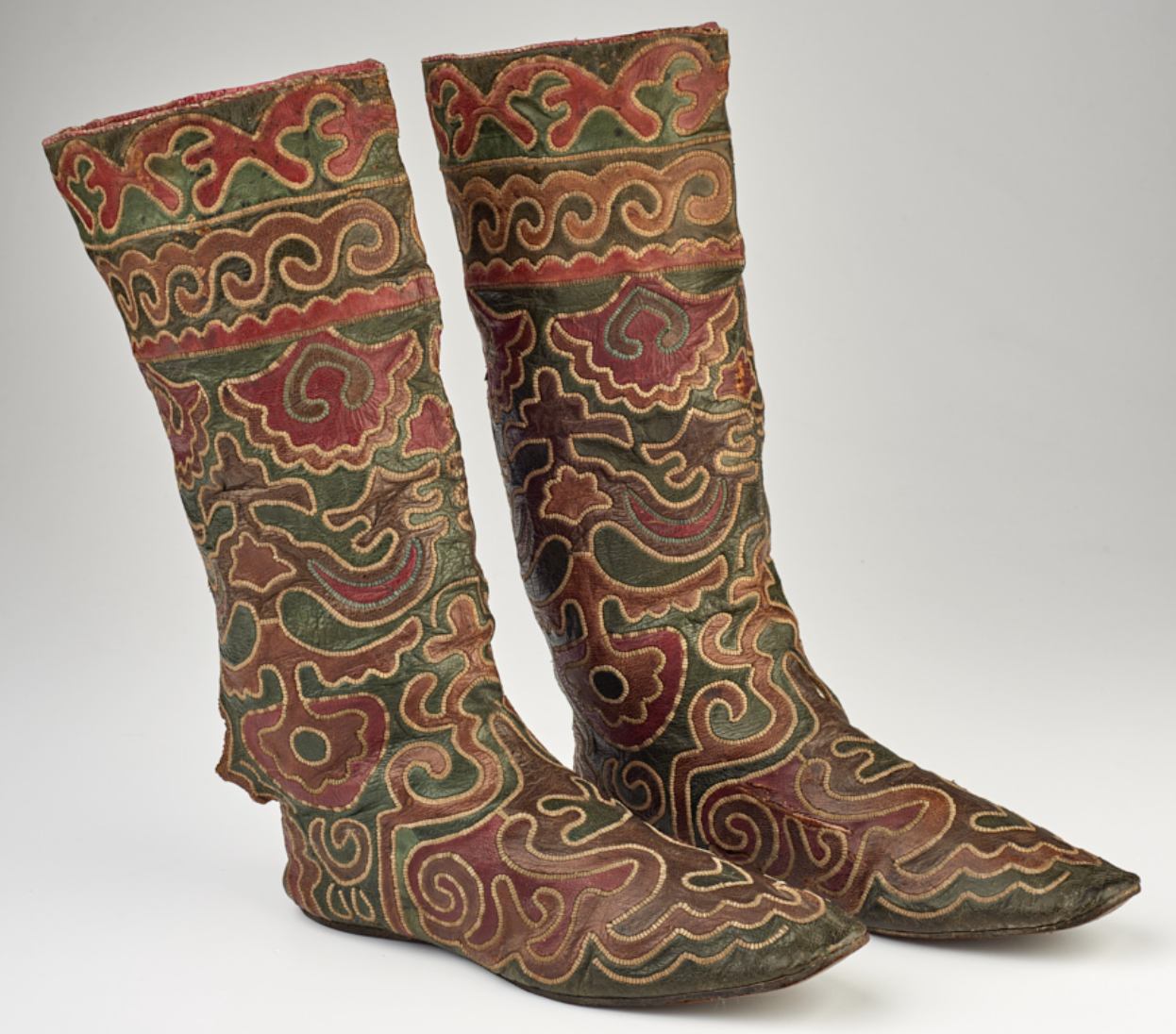
Production Place: Hungary
Museum of Applied Art, Budapest, Hungary


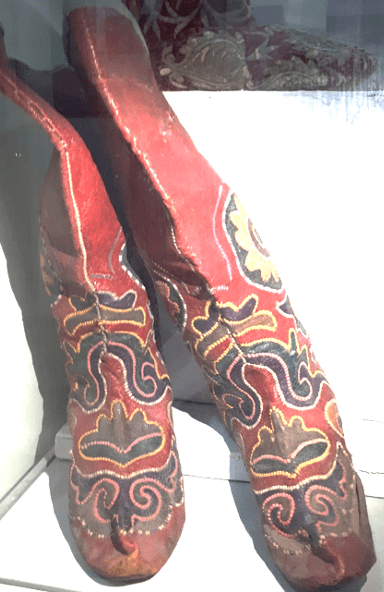


Rossiyskyi Ethnographic Museum, Saint Petersburg, Russiyan Federation

Ethnography Museum, Astrahan’, Rossiyan Federation
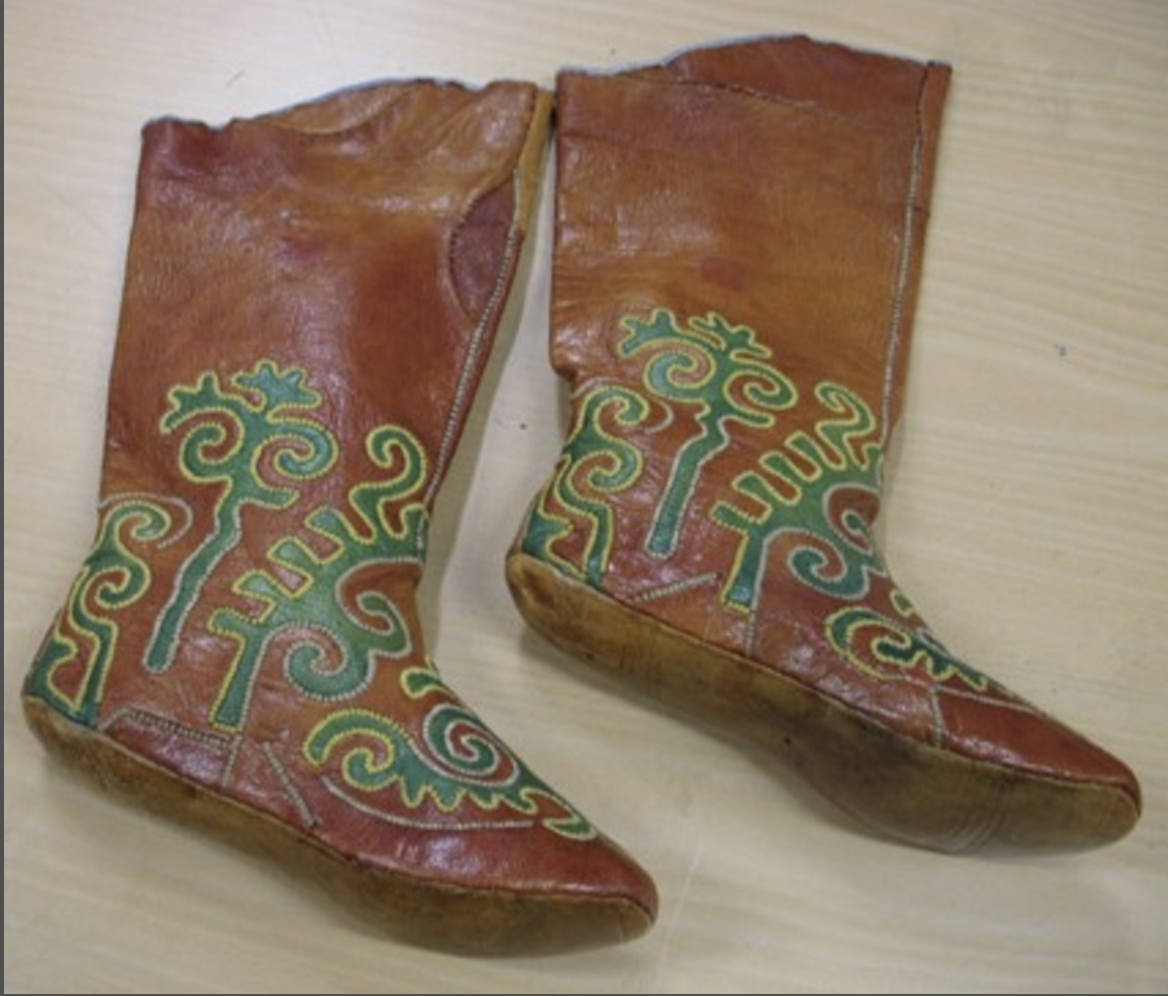
Vanersborgs Museum, Sweden accessed via Digital Museum Collection. Production label: Ryssland
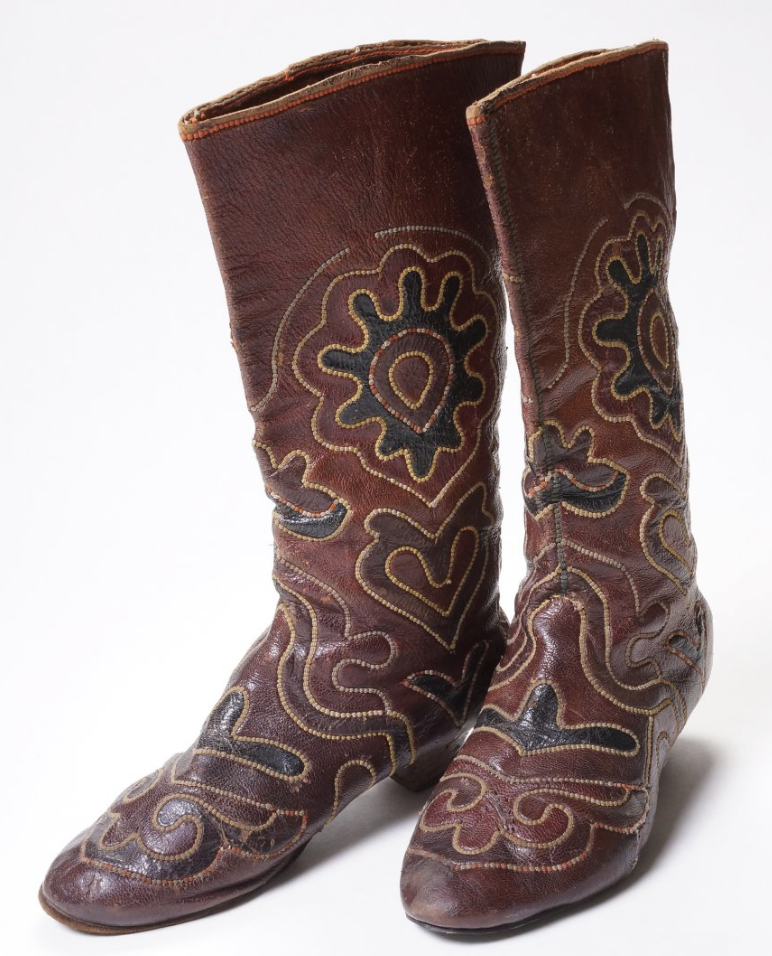
Permskiy Ethnography Museum of Rossiyan Federation
- This below item deserves special attention: this time auctioneers mislabeled Tatar Boots as Meskwaki Moccasins. Meskwaki people of Algonquian origin from the East Woodland Culture are indigenous to the modern states of Michigan, Wisconsin, Illinois, Missouri, and Iowa of America. Although native people of American continent have very elaborate leather craft, the popular technique they decorate leather items with is beadwork. The pair of boots below is crafted with different design technique (leather mosaic) that had been created by Tatar people who are indigenous to Volga-Ural area of modern Russian Federation. Those boots are called shchitekler that in Tatar language means decorated tall footwear.
- The story of this boots offered by Invaluable (a marketplace for antiques) is creative but has no valid factual base. It should be noted that footwear of indigenous people of Americas, indigenous people of Volga-Urals as well as fanciful boots of American cowboys – all have one common denominator: they are made of genuine leather and beautifully decorated. But decoration patterns and techniques are all unique and should be recognised and celebrated individually!

- Replication of “Tartar” boots (dated 1557-1587) is housed at Livrustkammaren museum in Sweden as of 2009.
 Unique Leather Mosaic of the Tatars