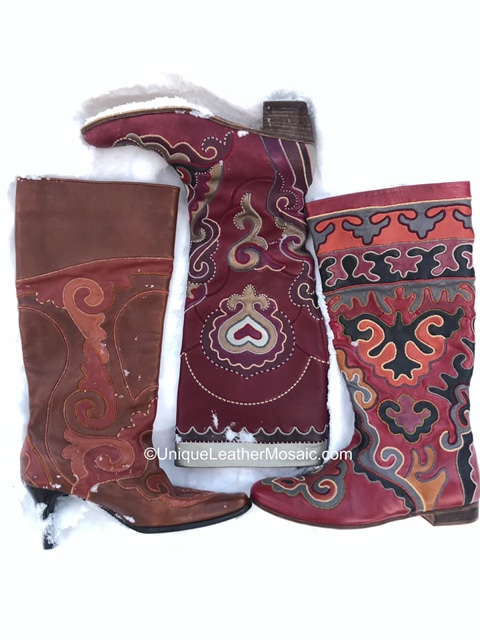
Symbolic Power of Footwear

When your dream comes true and you, finally, can “touch” (…well…stay in front of ) the 2300 years old organic exhibit – the leather boots of a noble Altai woman -, a sensible connection with the past starts pulsating through your veins. You can actually feel the rhythms and visualise the reality of those times through the impressively intricate and symbolic decorative handwork captured on the boots. They have been waiting for so many years to be appreciated, interpreted.
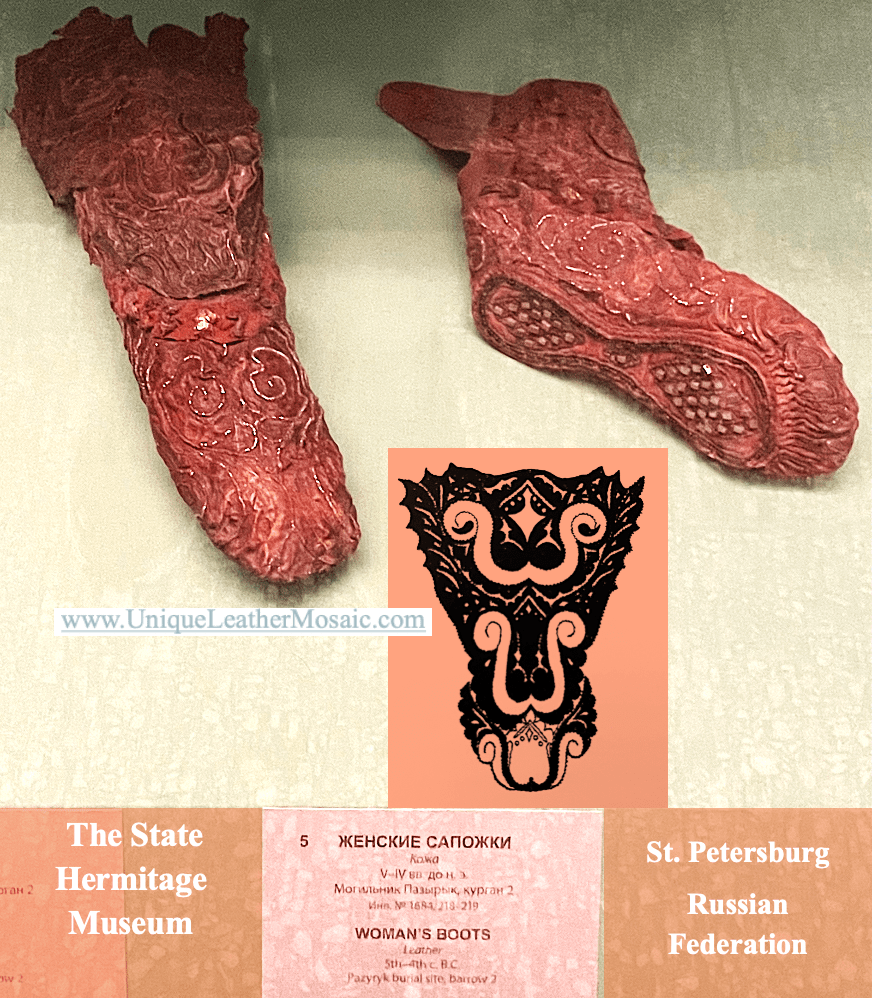
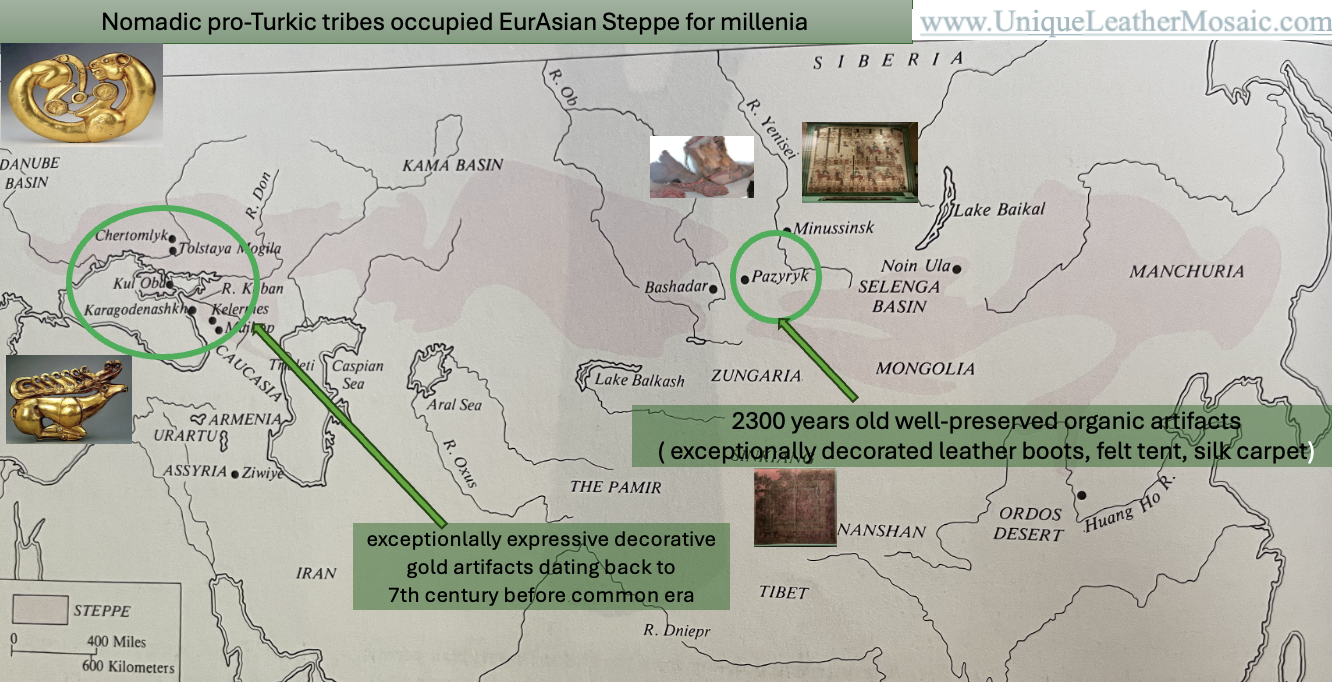
The worldview of early EurAsian steppe nomadic people of Turkic background (ancestors of Bulgar-Tatars) dwelled on a strong belief  in procreation and progression of life as well as promotion of marriage and healthy offsprings. This core belief was protected by Tengri and Umai – the spiritual deities of well-being, wellness, family unit and woman health.

In artistic interpretation, the Bulgars-Tatars have been illustrating the code of wellbeing in the form of a stylised progression from the ground towards the sky. The creative way of showcasing this code was mastered in shchiteqler – a unique artistic form of Tatar people. A traditionally decorated shchiteq composition has four parts that corresponds to stages of human life: birth, growth, blossom, and afterlife. Each part is depicted through specific stylised symbolic elements that tell a story of the boot’s creator or owner. 

Dirt or Snow, Tatar Boots Are to Glow!

As it turns out snow is the best canvas to display the splendour of Tatar boots (shchiteqler)! But to embrace the beauty and comfortability of shchiteqler during wet or snowy weather, one would need another piece of footwear – qalushlar. Those are the rubber low overshoes that would protect gentle leather and intricate ornaments from dirt and water.

Museum of Ethnic Cultures of Minzu University houses the Tatar boots with qalushlar on – that is how schiteqler were protect at the beginning of 20th century.

At the beginning of the 21st century, Crocs are contemporary alternative to qalushlar that care for my beautiful schiteqler!

The hope is that sooner then the beginning of 22d century the overshoes become made of ecologically-friendly materials: not from synthetic rubber of traditional qalushlar and plastic of Crocs (both are derivatives of crude oil), but of natural and renewable materials like dandelion: the special one that is abundant in Eurasian steppes where decorated boots began their charm. Kudos to Continental for engineering the innovative tires from plant kok-saghyz – a modest and powerful dandelion that is native to Central Asia (Kazakhstan, Kyrgyzstan, Uzbekistan). It is translated from Kazakh language (and also Tatar) as “root gum” and it’s impressive qualities were discovered by USSR/Soviet scientists in 1932.

Another footwear that Tatar people would put on to protect soft Tatar boots are either bashmaqlar or shchuweqler like the ones pictured below (middle) in the sketches by Tatar prominent sculptor and painter Baqi Urmance. Those sketches (started in 1970) were meant to serve as a decorative background for the Soviet-ideolozied museum of Tatar prominent poet Gabdulla Tukay in Kazan. They ended up not being displayed in the museum but they made it on this website! Urmance’s work masterfully depicts the dynamics of Tukay’s Kiseqbash poem (written in 1908) as well as skilfully showcases the busy life and Islam-dictated fashion of Tatars of early 20th century in the Tatar biste (neighbourhoods) of Kazan.

Sketches by Baqi Urmance

If Baqi Urmace is the staple of Tatar visual arts, Gabdulla Tukay is the staple of Tatar literary arts, then not mentioning one more Tatar staple of musical art Salikh Saidashev would not be fair. Salikh Saidashev is one of the creators of Tatar music that was aligned with Soviet Union’s atheistic (absence of religion) ideology and aesthetics. Here is the glimpse of Saidashev’ & T.Gizzat’s musical “Merchant” (created in 1930ies) that vividly displays the new interpretation and stylezed reality of Tatar life – where religious Islamic practices were forced to be removed but the spirit of cheer and resilient community persist.