It is a fact that overwhelming reliance on technological advances is eroding our memory. So, finding engaging activities to hone cognitive abilities is a must! What can be more engaging for the brain than challenge of finding your way without GPS (global positioning system)? One of the best places to be lost and search for the way out without a map are the mazes of Marrakesh Old Medina.
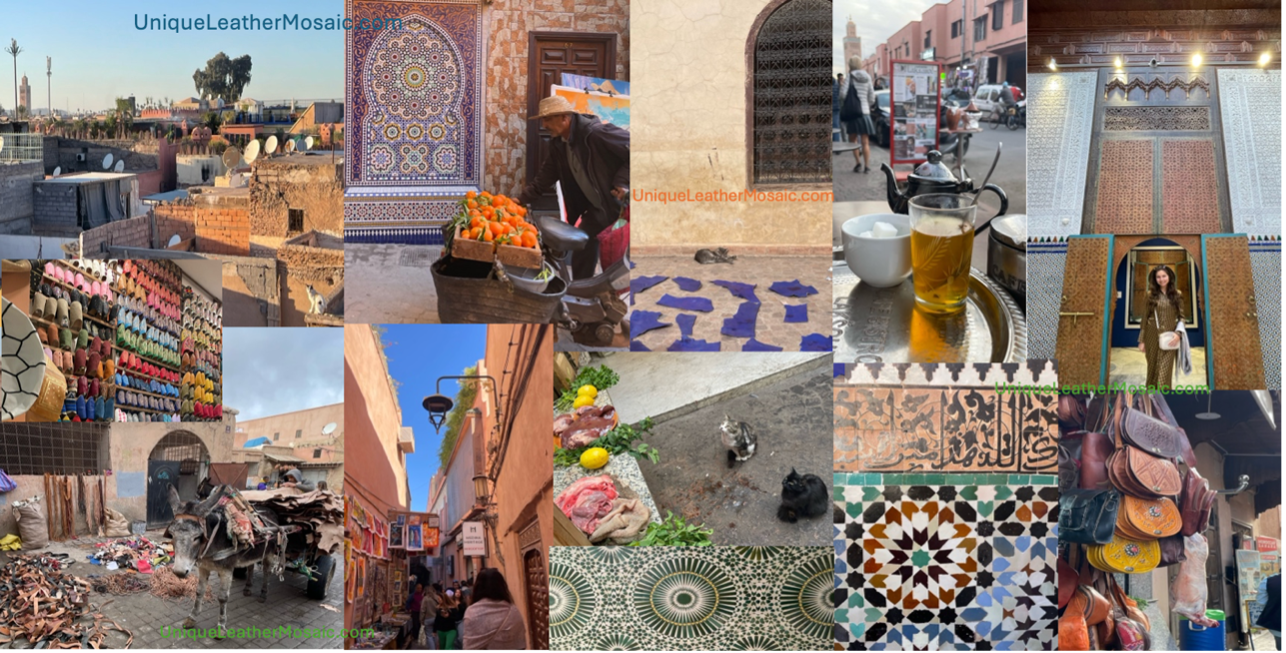
Rows of eye-catching, fragrant, colorful, locally sourced goods made of leather, fibers, brass, clay, straw. Endless flow of sellers, buyers, donkeys, cats, bikes. Mesmerizing geometry of shapes, blasts of vivid colors, clouds of fragrant aromas of simmered-for-hours dishes, soothing sounds of call for prayers and chatting in Amazigh, Arabic, French. Moroccan labyrinth of souks captivates and educates. Our goal of “not to be lost” were successful the more we practiced it. Although, the other goal, fueled by our passion to leather craft, was not so much. We were on a mission to observe and document the decorative leather stitching technology that looks like “Kazan” stitch that has been utilized and mastered for centuries in Tatarstan. It is roughly 5000 km of air distance between Tatarstan and Morocco, but those are the places where, up to this day, this distinct manual decorative stitch is being actively used despite of pressing lures of mechanized world.

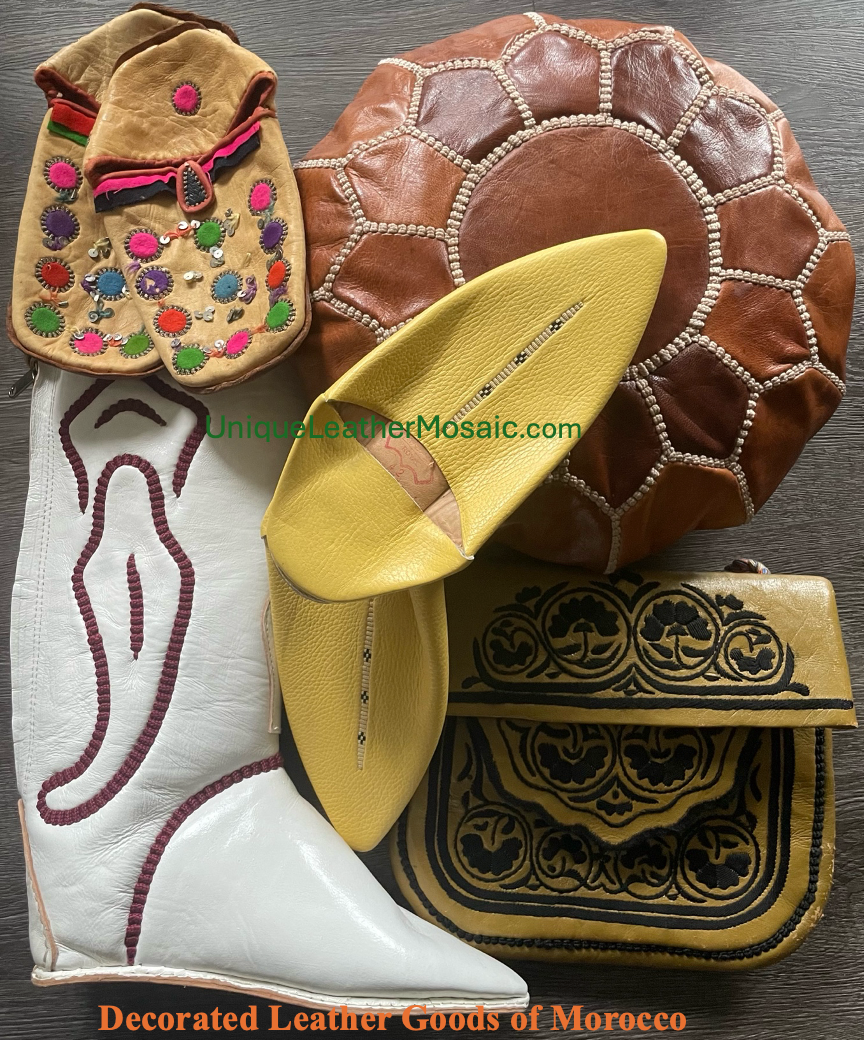
In Marrakesh, we explored myriads of tiny workshops that had leather merchants and crafters working the magic of creating and attuning to the leather goods (Ottoman poufs, Berber bags, babouches), but every time we wondered about the leather decorators (stitchers and embroiders), there were silence, suspense, mystery around it. We were told that all decorative stitching happens in the female cooperatives in the Atlas Mountains.
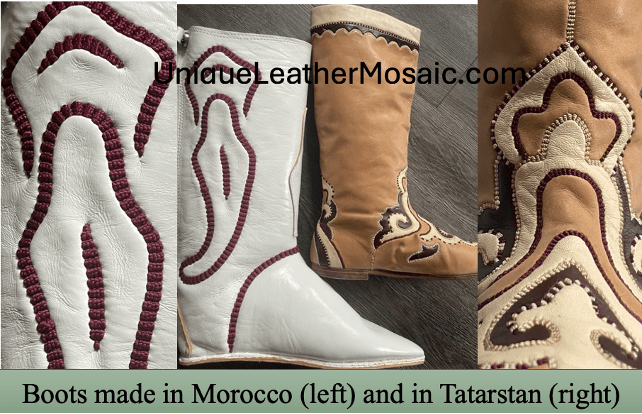
When we asked to arrange for the compensated educational tour, various excuses were offered with subtle intention of pretense. We left Marrakesh without being able to see the stitching in action, but we got excited to find the only workshop that sells Tbourida boots. The boots that are worn during famous annual festival of riding horses and firing riffles that has been a Moroccan tradition since Middle Ages.
The decoration of these boots is made with the technology of leather mosaic that also the Tatar boots (shchiteqler) are made with. The decorative pattern cutouts and their attachment with distinct decorative stitch are similar, but shchiteqler are created with much more sophisticated technology of Tatar leather mosaic that is unique in its design complexity and intricacies of ornamental patterns and colors.
The inquisitory nature of our short trip to impressive Morocco led us to having more questions than answers, specifically: How the exchange of leather crafting technologies happened in the time of Volga Bulgaria, Ulus Ulug, Kazan Khanate, Kazan Guberniya of Russian Empire (the earlier state names of current Tatarstan, the subject of Rossiyan Federation)? Is there any reason for the distinct manual decorative stitch to be deliberately guarded in Morocco? What do the Arabic words “sabra” and “sarma” referred in the souks mean? We might be digging for the answers to the first question for some time, but answers for the other two yielded some results thanks to…well… technological advances: internet. It seems that in a middleman economy of Morocco, creating an enticing enigma and baseless mysteries are the ways to keep the tourists coming. It turns out that:
An Arabic صبر “sabra/sabr” (meaning “patience”) is referred to the cactus and the thread that is used to decorate the leather goods. It is widely believed that the thread is made from cactus, but is it really?: Here is an investigative story on searching the puzzling “sabra” silk.

An Arabic سارما “sarma” (from Ottoman Turkish صرمه meaning “golden or silver thread, wire; wrapping”) is a term for the stitch that we have been looking for: It is performed similarly to the “Kazan” stitch. This compassionate FB page LarahCollection introduces the artisans of the Altai Mountains and their craftsmanship without the “burden” of the middleman. Sarma stitching is described as “a special embroidery work on leather that consists on sewing two pieces of leather together with special knots in the junction. All this work is done on the back of the leather”.
The page offers a video of the stitching that is performed almost in the same manner as “Kazan” stitch with a little difference. Can you engage your brain to identify this little difference by comparing the process of creating the Tatar “kazan” stitch and the Moroccan “sarma” stitch?

 Unique Leather Mosaic of the Tatars