What is of value for you? Taste of ripened-on-a-branch berry? A last model of the smart phone? View of sunsetting rays enveloping stalks of golden wheat? Mother’s unconditional love? House with state-of-the-art appliances? Heart-warming gathering? Memories collected by generations? Expensive watch? Discovery of something novel? Effortless consumption? Effortful unique expertise?
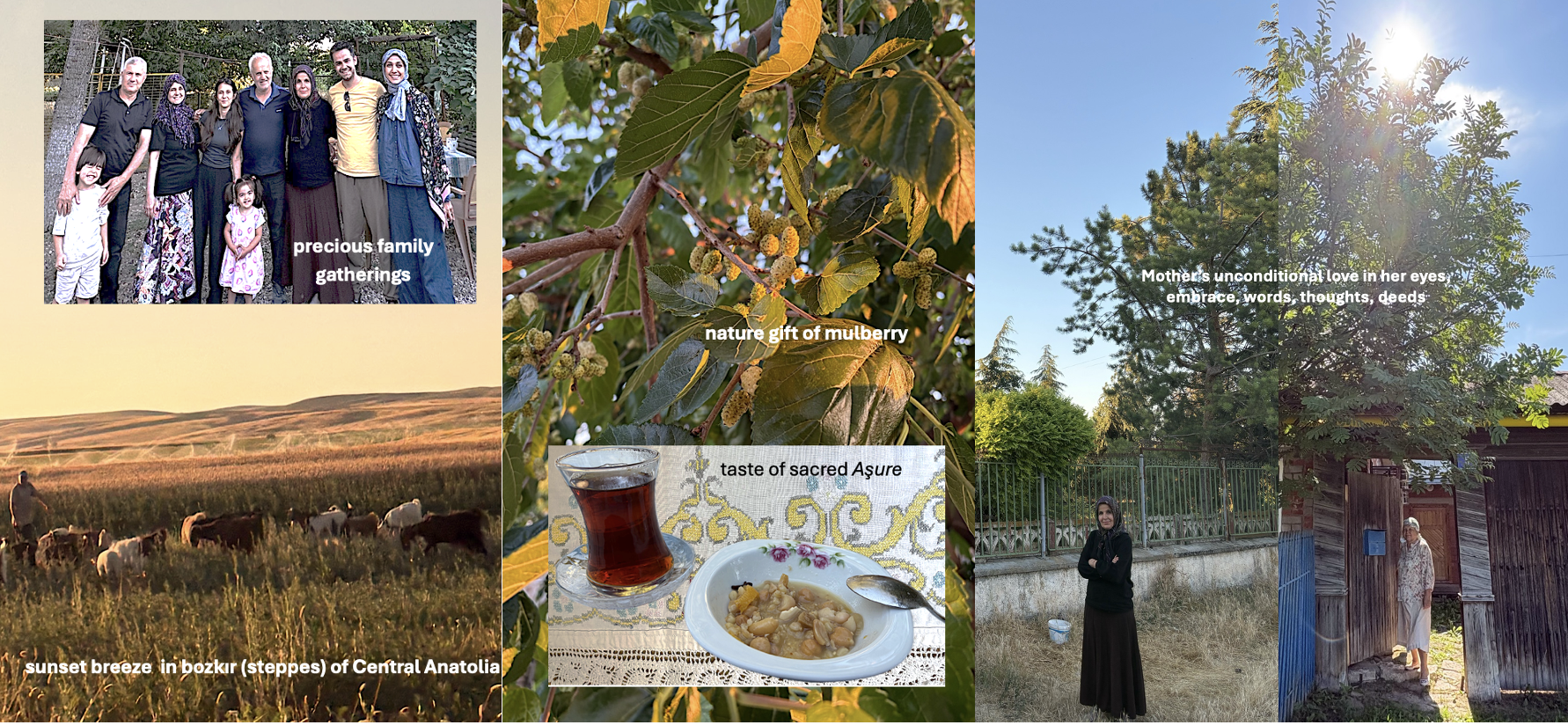
A value depends on many factors, the most powerful of which are the social norms of the times that dictate the preferences. The value is valuable only when it is valued – a wise person said, and when it requires an effort – we add. For us, the precious and valuable is:
–experiencing nature-raised, deliberately-slow-cut-then-grilled lamb meat stripes followed by sacred aşure – a-once-a-year treat meant to be shared in the month of Muharram – in a company of a sweet Turkish family that know how to appreciate time spent together.
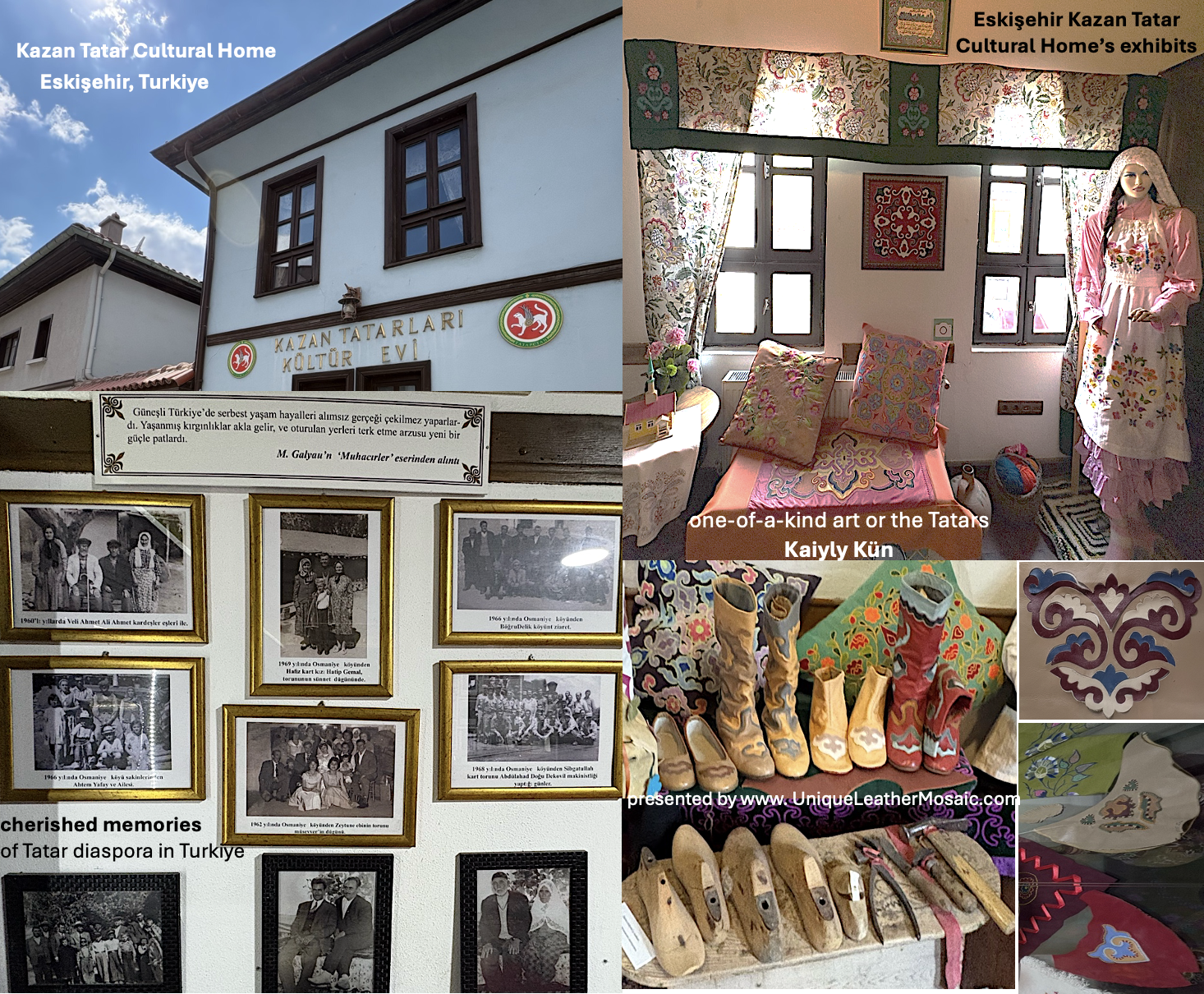
–taking time to feel shared joys and pains of immigration, when visiting Kazan Tatar Cultural Home in Eskişehir, Turkiye.
-learning that a shchibureq is a Kirim Tatar specialty. The word comes from Turkic “çi böreq” meaning a deep-fried small pie (böreq) with not-cooked-before-frying (çi) ground beef. The best shchibureq is made in Turkiye’s Eskişehir – the city that has embraced the Tatars (Kazan and Kirim) as well as many other Turkic people, and non-Turkic alike. It carried a torch of a Turkic Capital of Culture in 2013. Kazan, Tatarstan followed the suit a year later, in 2014.
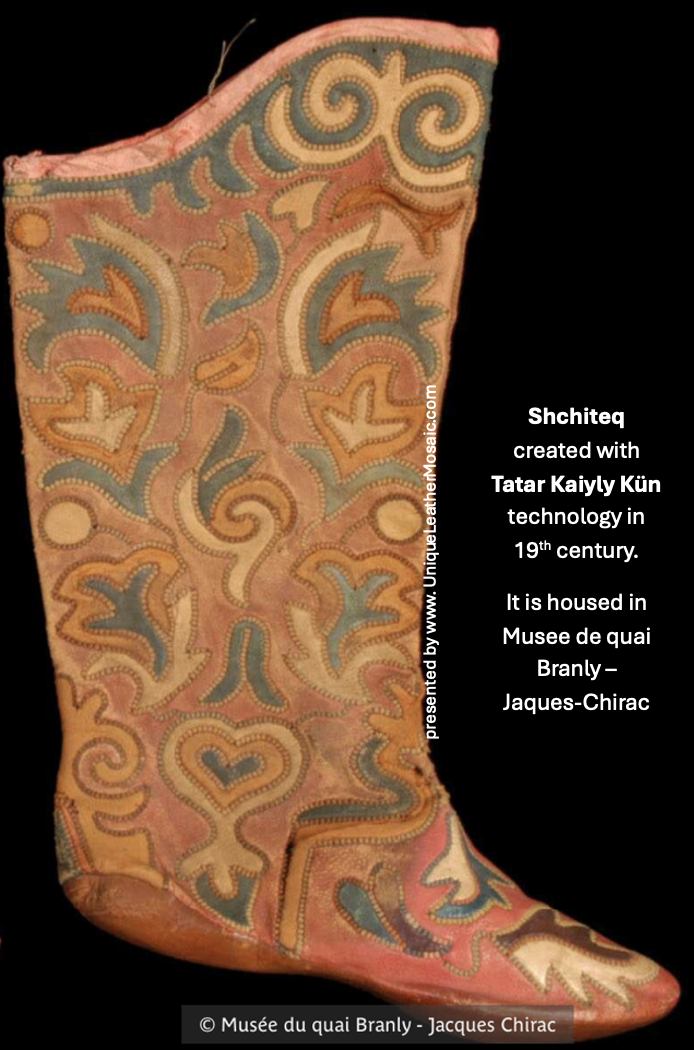
–discovering unprecedentedly-uniquely ornamented shchiteq in a collection of Musee Du Quai Branly Jacque Chirac. A combination of stacked ornamental patterns scattered throughout whole boot canvas has not yet been encountered by our research team before (view other shchiteq discoveries in world museums on Museum Tatar Boots page).
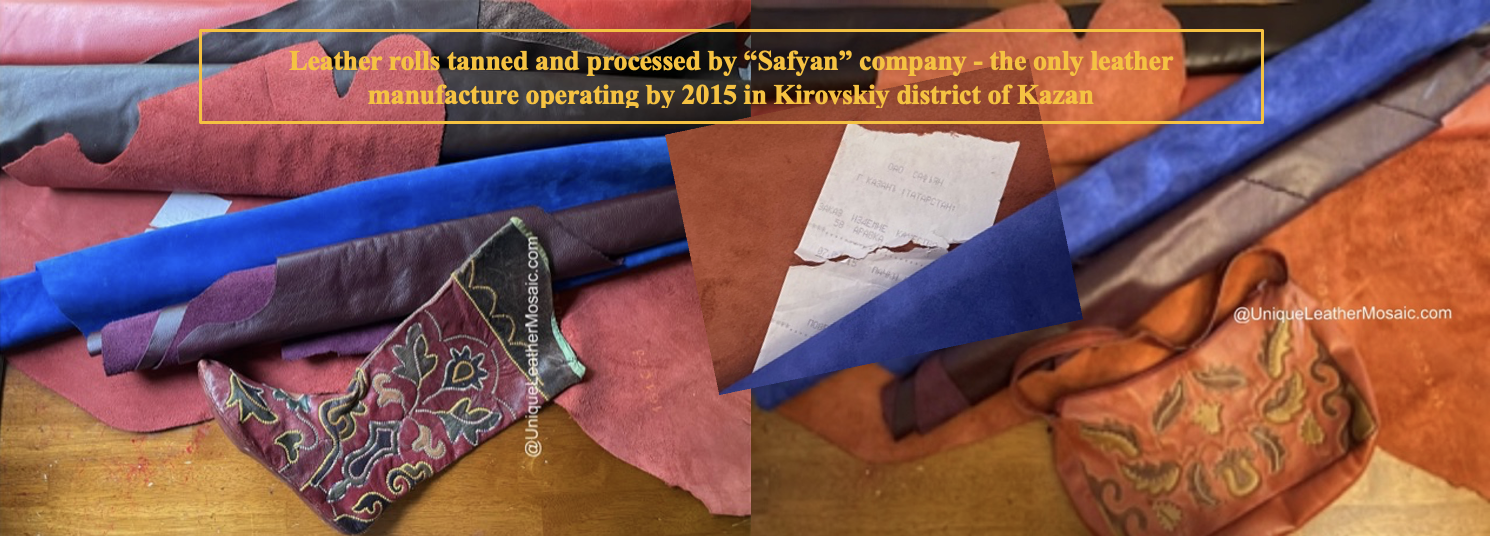
This late 19th century shchiteq was made from the softest fragrant goat/sheep leather (once called “bulgari”/saffyan) and features visual elements that showcase a deep connection of the Tatars with other Turkic people’s material heritage.
Most importantly, what is of value for our research team, is bringing attention to the current state of the craft of shchiteq-making, a handcraft that had been mastered by the Tatar-Bulgars for ages. Once valuable and profit-making, expertise of shchiteq-making is, now, in hands of a small number of aging masters.
Reported by M.A. Rylov in 1886 on the pages of “Volzhskiy Vestnik” newspaper, estimated 500+ shchiteq-making experts in Kazan metro area (then part of Rossiyan Empire) traded their skills along with 2000+ shchiteq ornamental patterns stitchers. There were more than 10 big factories that processed soft and fragrant leather (bulgari/saffian/yuft) and produced sought-for hand-stitched shchiteqler along with a myriad of independent shchiteq ostazlar (masters) with annual sales grossing over 5 mln. rubles (~107 mln. dollars of 2026). Shchiteqler were sold throughout Asia, Europe and America.
After political upheaval (within the borders of then-Rossiyan Empire) and establishment of USSR (Union of Soviet Socialistic Republics), the profit-making shchiteqler producing businesses, along with other enterprises got nationalised and dwindled due to the lack of demand, competition, etc. Attention to native handicrafts were tried to be channeled in 1920ies by government-established artisan artels with some success through 1930ies. After 1960ies, the efforts of creating state factory to manufacture simplified versions of shchiteqler yielded some results, and for ~35 years they kept a centuries-old unique craft alive. The factory did not to make it through turmoil of USSR collapse, and ceased to exist in 2001. A legacy of Arshcha footwear factory and once-prominent shchiteq-making mastery is now in hands of small privately-owned companies “Sahtian” and “Shchiteq” as well as independent boot-makers. As of 2026 (140 years later of Rylov’s reporting), only 2-5 independent shchiteq-making masters practice their trade, mostly, on “on&off” basis, by requests. “Sahtian” and “Shchiteq” employ few more shchiteq-makers to make a number of shchiteqler to keep a small inventory on the market.
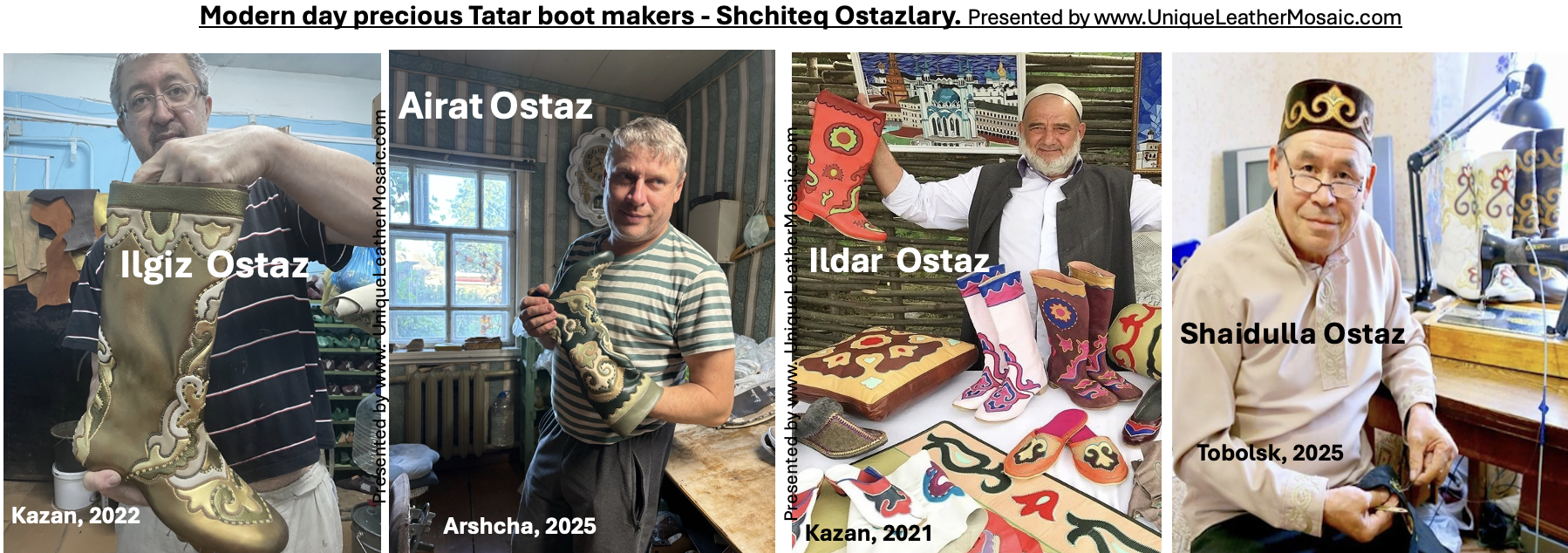
Keeping a tab on the values that are valued is a must! So appreciation of an effortful human involvement – hand-made, heart-felt, brain-created – has a potential for a long run!
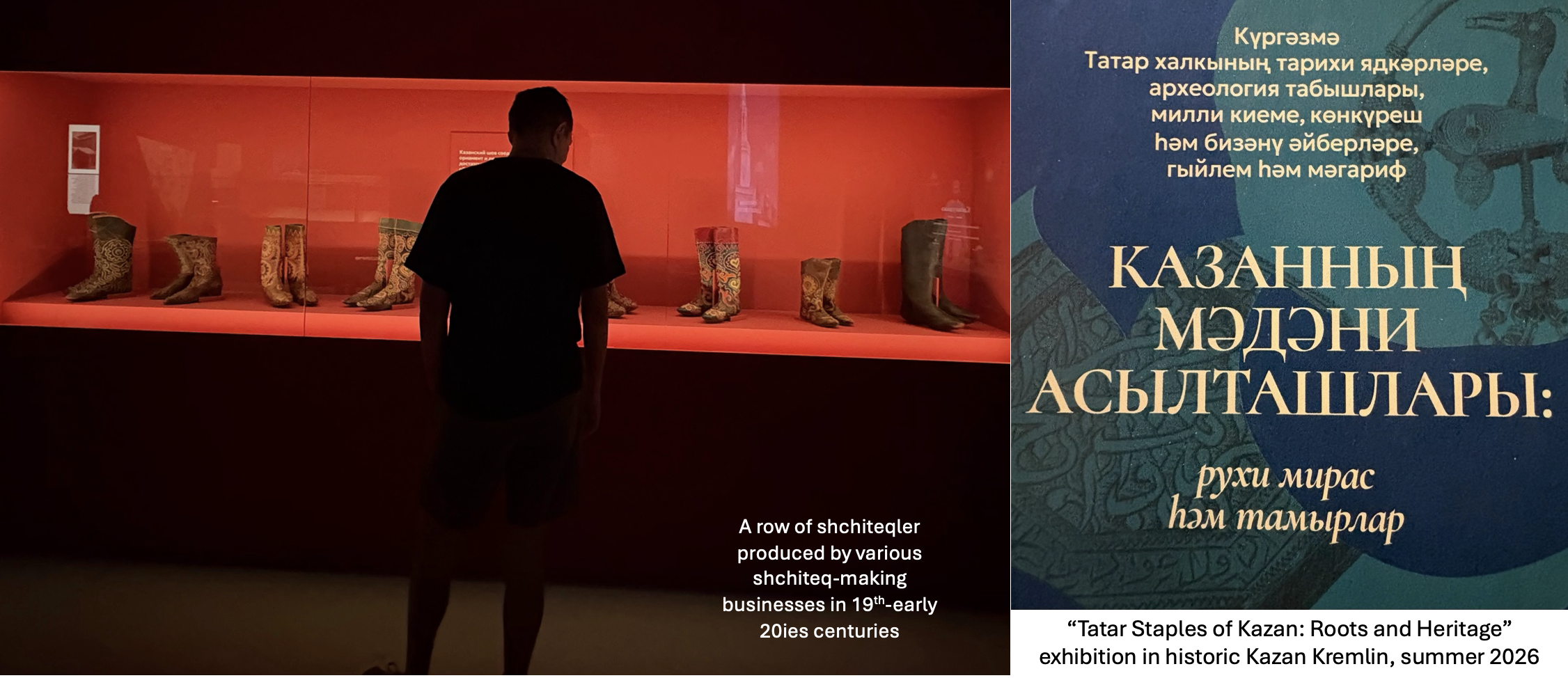
Wishing that exceptional skills-set of shchiteq-making is not extinct in 2126 and is valued as much as 250 years prior. So future generations have a chance to experience the warmth of experts’ hands while wearing shchiteqler. So belonging to a manual effortful material centuries-old legacy of exceptional Tatar shchiteqler is even deeper later than it is for us now, in 2026,….. experiencing a historic diversity of shchiteqler behind glass in a museum.
Let us complete the values exploration with quoting kyimәtlәr (“that is what precious” in Tatar language) that generations of Tatar people were instilled through various channels including radio Tәrtip (meaning ~shipshape in English). These values are based on Islamic appreciation of humanity. Most of the words are the borrowings from the Arabic language, but concepts are universal for all Muslims alike (read here about the Tatar’s story and their official acceptance of Islam in early 10th century).
- Иман (iman)- faith
- Күңел (küngel’) – soul, internal peace/ content/ satisfaction
- Акыл (akyl) – intellect
- Шөкер (shöker) – gratitude
- Әдәп (әdәp) – knowledge of handling oneself kindly and respectfully with others
- Сабыр (sabyr) – patience